It only has to fail once
A review of Kenneth Waltz’s ‘More may be better’
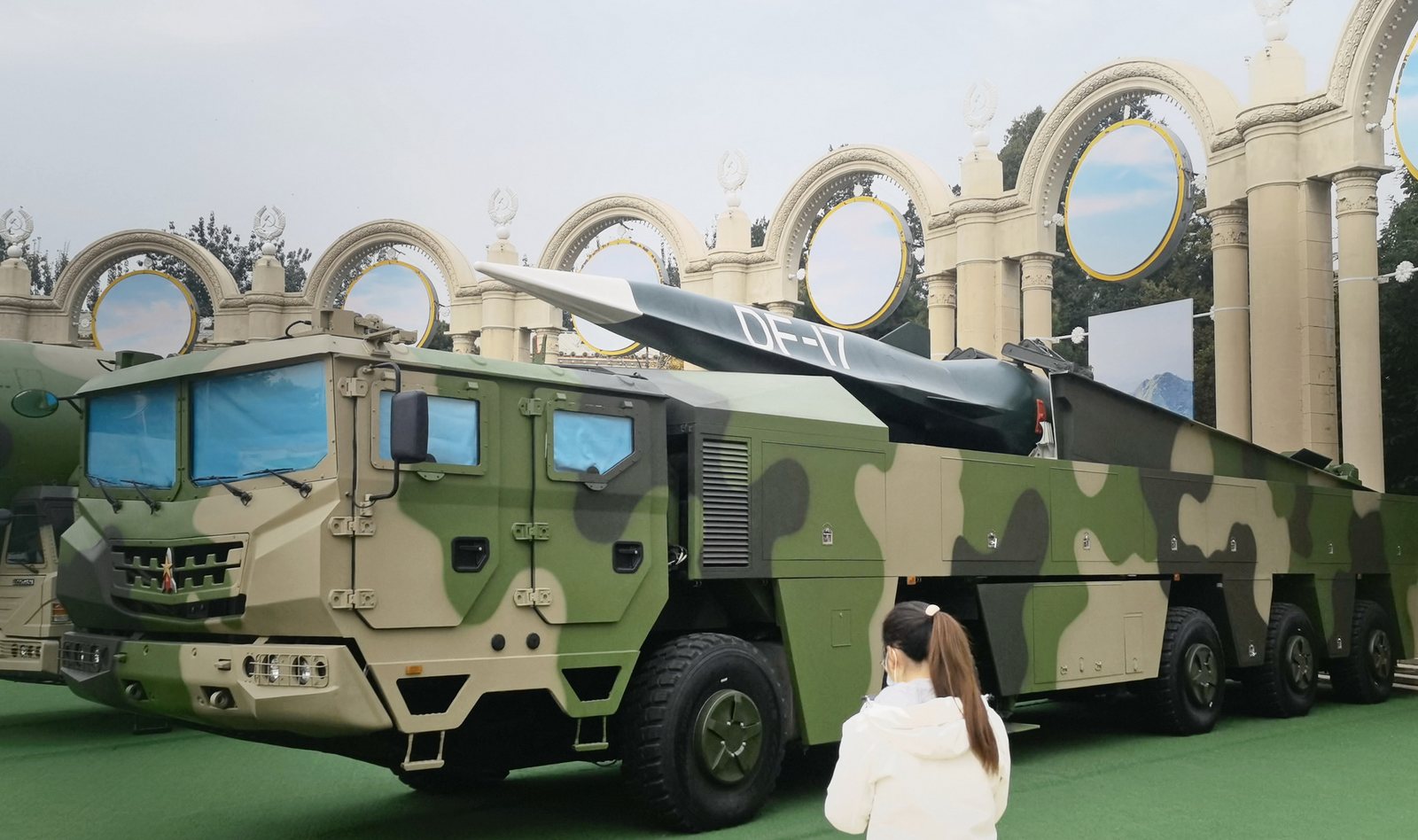
A DF-17 missile and launcher on display at the Beijing Exhibition Centre, 2022. Photo: 颐园居, CC BY-SA 4.0
The existential threat of nuclear weapons casts a long shadow over the anarchic structure of international politics. Since the dawn of the atomic age, the question of whether the spread of these weapons stabilises or destabilises the international order has percolated through academic discourse. At the heart of this debate stand Kenneth Waltz and Scott Sagan, two theorists who examine similar historical precedents and yet arrive at vastly opposing conclusions. In More May Be Better (2013, p.40), Waltz asserts from a structural realist perspective that nuclear proliferation should be 'more welcomed than feared,' on the grounds that the prospect of mutual destruction imposes a cooling effect. Conversely, Sagan in More Will Be Worse (2013, p.107), argues that this optimism is dangerously misplaced. He contends that organisational biases within military bureaucracies systematically undermine the rational calculations upon which deterrence logic depends and that the US should not encourage the growth of new nuclear powers. This essay will evaluate this debate, arguing that while Waltz’s simplistic theory offers a powerful idea of deterrence, it is ultimately undermined by an overreliance on the rational actor assumption. By comparing their use of evidence and theoretical frameworks, the essay will demonstrate that Sagan’s organisational approach provides a more empirical, albeit pessimistic, reflection of the risks inherent in a nuclear-armed world. Crucially, however, Sagan's theory is not itself sufficient as the rise of non-state actors exposes the limits of a state-centric framework shared by both theorists.
Waltz is a structural realist who argues that states exist in anarchy and that self-help is the guiding principle (Waltz, 2013, p.4). As a result of this viewpoint, Waltz's arguments rely on the idea of states being rational, primary actors which does create an elegant argument when looking at interstate competition. Waltz (2013, p.7), demonstrates this by arguing that the introduction of nuclear weapons makes states inherently more cautious citing the Cuban Missile Crisis and the eventual de-escalation compared with the carelessness with which France and Britain went to war in the Crimea. The strongest points he makes are those challenging Western ethnocentric views, often mired in Imperialism. Waltz refutes the notion that non-Western powers are temperamentally or institutionally incapable of responsible nuclear stewardship and argues that a nuclear-armed Egypt or Syria, with populations concentrated in a few major cities, would be unwilling to trade lives on a catastrophic scale (Ibid, p.14). Moreover, he observes that even in the absence of Israel having confirmed nuclear weapons, no Arab country took the risk of an all-out assault and would be even less likely to do so against a known nuclear deterrent.
While on the other hand, Sagan disagrees with this argument (2013, p.68) taking a far more pessimistic stance, moving the level of analysis from the system to the organization. He argues that military organisations responsible for nuclear arsenals often harbour institutional biases towards offensive action, which can lead to deterrence failure. By rejecting Waltz’s one-dimensional view of the state, Sagan employs organisational theory to show that there are severe limits to human rationality. Calculations are often myopic, shaped by the internal culture and survival instincts of the bureaucracy rather than the survival of the state itself (Ibid, p.71-72). This results in a tightly wound organisation where the probability of miscalculation is high. Sagan demonstrates this with empirical evidence from the Cold War, such as officers independently jerry-rigging Minuteman missiles (Ibid, p.96) or military leaders advocating for preventative strikes under the Truman administration (Ibid, p.78), actions that defy the rational survival logic Waltz takes for granted.
Waltz instead focuses on the broader international system and suggests that fear of militaries with shaky civilian oversight acquiring nuclear weapons is overstated and then demonstrates the presence of Russian generals in the Politburo and the fused nature of China’s military and civilian body (Waltz, 2013, p.15). This demonstrates the divergence in approach to the nuclear issue, as Waltz takes a holistic view of the whole Cold War in that there was never a ‘hot war’ and yet clearly behind the scenes there are countless examples of near disasters.
The differing views between these two thinkers are ultimately a conflict of methodology, Waltz’s deductive parsimony versus Sagan’s empirically heavy approach. Waltz summarises the Cold War and boils it down to the idea that as defensive capabilities increase, the likelihood of war decreases (Waltz, 2013, p.40). This view is inherently one that seeks to identify a universal law of nature within the international system. Yet, the weakness of this theory if applied in reality is its intolerance for error. As Tow (2014) states, a deterrence thesis only needs to be incorrect once for an unimaginable disaster to strike. Humans have a long history of irrationality that defies Waltz's logic-based theory and simplifying the Cold War may be leaving out the most dangerous variables of human nature.
A further criticism of Waltz’s parsimony is that he creates a binary idea of peace versus a general strategic war, which does not account for the myriad forms of violence that fall in between. More importantly, he downplays the importance of ‘actions at the periphery’ (Waltz, 2013, p.25) as he argues that the dominant states can be bolder in these environments, as the actions of the US in South-East Asia would not significantly alter the international playing field and they could instead ‘fight without fearing escalation’. This argument seemingly contradicts the point of nuclear weapons, as he earlier talks about the carelessness in which the Crimean War was waged by Britain and France (Ibid, p.7) due to a lack of consequence. Yet seemingly this lack of consequence still applies for superpowers if the conflict does not alter the overall system power balance.
The 1999 Kargil War between India and Pakistan provides a post-Cold War test of both theoretical frameworks and one that supports Sagan over Waltz. By Waltz's logic, mutual nuclear capability should have produced mutual caution, rendering a conventional military incursion irrational (Waltz, 2013, p.7). Yet Pakistan's military planners not only initiated the operation but, as Joeck (2008, p.136) documents, were so consumed by 'weather, tactical advantage, and deception' that nuclear escalation simply ’did not affect their calculations.' This validates Sagan's fear of professional military organisations, driven by institutional incentives and tactical fixation, operating below the threshold of systemic rationality that Waltz assumes.
Joeck's analysis further undermines Waltz's binary conception of deterrence stability. Waltz defines peace as the absence of 'general war among the major states' (Waltz, 2013, p.4) and downplays 'actions at the periphery' as strategically inconsequential (Ibid, p.25). Moreover, it further complicates the picture as to what counts as peripheral conflict and what is integral to a nation’s identity and security, as Kashmir is central to Pakistan’s identity. Thus, Joeck (2008, p.137) goes against Waltz’s claim that states are less likely to take big risks in their own backyard. Joeck (2008, p.118) also notes that the US played a decisive mediating role in preventing escalation an external variable Waltz's systemic theory has no accounting for. Finally, the fact that the crisis was resolved short of nuclear use does not, as Joeck (Ibid, p.139) stresses, validate deterrence and instead may simply reflect the role of American interventionism and the tactical limits of the initial incursion.
While Kargil tests Waltz’s framework, the rise of the non-state actors exposes the limits of a state-centric assumption shared by both theorists. Barnea (2025, p.7), drawing on security expert Robert Page, argues that deterrence is structurally inapplicable to terrorist organisations, who are often determined to reach ideological goals regardless of the material cost. The 2023–24 Israel–Hamas conflict illustrates this dynamic. Barnea (Ibid, p.25) shows how the Israeli establishment's mindset that 'Hamas is deterred' was proven catastrophically wrong on 7 October 2023. A non-state actor can exhibit rationality while remaining entirely undeterred at the strategic level, precisely because it does not prioritise state survival above ideological achievement.
While the Israel-Hamas conflict is not a nuclear one, its theoretical implications for the proliferation debate remain the same. If a technologically sophisticated state can fail to deter a non-state adversary driven by ideological rather than survivalist goals, Waltz’s confidence in 'rational' deterrence as a universal stabiliser is fundamentally flawed. More significantly, this conflict exposes a shared limitation in the Waltz–Sagan debate as both frameworks remain focussed within state structures, leaving them vulnerable to the growing disjuncture between a state-centric order and the violent capacity of sub-state actors.
Ultimately, the divide between Waltz and Sagan is a conflict between deductive parsimony and empirical complexity. Yet, as the Kargil War and Cold War near-misses demonstrate, Waltz’s elegant logic is intolerant to the human and organisational errors that Sagan so effectively documents. In the contemporary landscape, where the distance from Hiroshima and Nagasaki grows and the actors involved become increasingly diverse, the disconnect between the power and the suffering of nuclear weapons grows. To view nuclear proliferation as a self-regulating mechanism is not merely an academic oversight, it would be a tragedy, as a deterrence theory only needs to fail once to result in unimaginable devastation. An adequate theory for the twenty-first century must, therefore, look beyond the state to account for the irreducible risks of miscalculation and the ideological irrationality that neither Waltz nor Sagan fully captured.
Bibliography
Barnea, A. (2025) ‘“Hamas is deterred” as wishful thinking: An analysis of how Israel empowered Hamas to attack Israel on October 7’, Journal of Strategic Studies, pp. 1–31. doi: 10.1080/01402390.2025.2565186.
Byman, D. and Holtz, M. (2023). Why Hamas Attacked When It Did. Center for Strategic and International Studies (CSIS). Available at: https://www.csis.org/analysis/why-hamas-attacked-when-it-did (Accessed: 2 March 2026)
Joeck, N., 2008. The Kargil War and nuclear deterrence. In Nuclear Proliferation in South Asia (pp. 118-155). Routledge.
Sagan, S.D. (1994) ‘The perils of proliferation: organization theory, deterrence theory, and the spread of nuclear weapons’, International Security, 18(4), pp. 66–107. doi: 10.2307/2539178.
Tow, W. T. (2014) ‘The nuclear Waltz: Rational actors, deterrence and nuclear non-proliferation’, Australian Journal of Political Science, 49(3), pp. 541–546. doi: 10.1080/10361146.2014.937371.
Waltz, K.N. (2013) 'More may be better', in Sagan, S.D. and Waltz, K.N. The spread of nuclear weapons: an enduring debate. New York: W.W. Norton & Co., pp. 3–40.