Selling, not lending
Beijing has stopped lending to Africa and started buying from it. Europe is still building railways
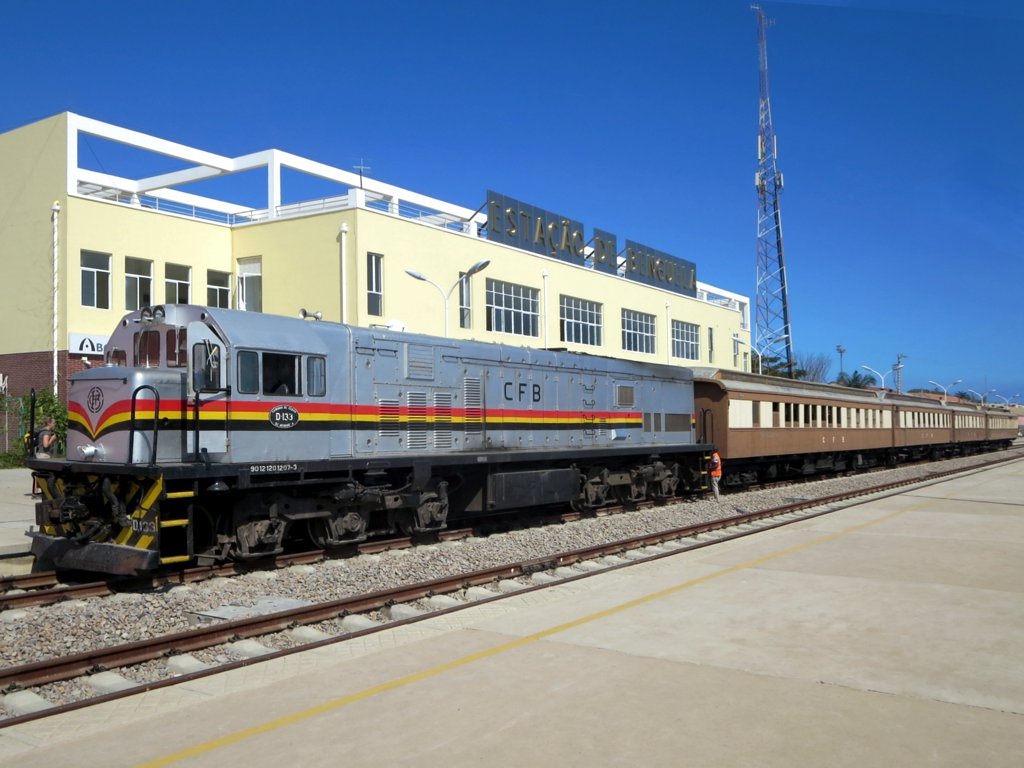
A train arrives at Benguela station on the Benguela railway, the Angolan line now at the heart of the Lobito corridor. Photo: David Stanley, CC BY 2.0
For two decades the story of China in Africa was told in loans. Between 2000 and 2024 Chinese lenders signed 1,319 commitments worth some $181bn with 49 African governments, according to Boston University’s Global Development Policy Centre. At the height of the Belt and Road Initiative more than $10bn a year flowed south. Last year the figure was barely $2bn. Those who read this as a Chinese retreat are reading the wrong ledger.
Beijing has swapped the bank for the bazaar. Trade between China and Africa hit a record $348bn in 2025, up nearly 18% on the year. On May 1st China extended tariff-free access to all 53 African countries with which it has diplomatic relations—every one bar eSwatini, which recognises Taiwan. No other big economy has made such an offer unilaterally. The gesture is cheap: Africa’s deficit with China swelled to $102bn last year as Chinese solar panels, machinery and cars poured in. But it is well aimed. Loans that sour breed resentment; open markets breed lobbyists.
Europe’s answer is Global Gateway, launched in 2021 with a promise to “mobilise” €300bn by 2027, half of it in Africa. Its flagship, the Lobito corridor—a 1,300km railway linking the copper and cobalt mines of Congo and Zambia to Angola’s Atlantic coast—is real and moving, with some €2bn of European money behind it. Elsewhere the picture is murkier. Brussels counts 138 flagship projects since 2023, but many predate the brand. And “mobilise” is a word that conceals how little is grant and how much is hoped-for private capital.
Nor is Lobito a sure thing. Much of the copperbelt’s heavy freight still trundles south to Durban or east towards Dar es Salaam, along a Tanzanian line that China has agreed to refurbish. African governments, courted from every direction, are renegotiating mining terms with everyone. Western diplomats like to say they are offering Africa a choice. Africans, increasingly, are treating it as an auction.
The deeper problem is that Europe is fighting the last war. It designed its offer to rival Chinese loans just as Beijing stopped making them. On the field where China now plays—market access—the EU is oddly diffident. Its “Everything But Arms” scheme already lets the poorest countries export almost anything duty-free. Yet fiddly rules of origin, a carbon border tax and anti-deforestation rules that fall hardest on smallholder cocoa and coffee growers mean the door is open in law and stuck in practice.
Fighting back means three things. First, open the shop properly. Loosen rules of origin so that goods assembled in Africa from imported parts qualify, and pay to help African exporters meet Europe’s green standards rather than merely imposing them. Second, buy what Africa wants to sell, not just what Europe wants to dig. From Kinshasa to Harare, governments increasingly insist that minerals be processed at home. Europe should finance refineries and battery-precursor plants along the Lobito line and sign long-term offtake deals that guarantee a buyer. China, which refines most of the world’s cobalt, cannot easily match that without undercutting its own plants.
Third, stop counting and start pooling. “Team Europe” remains a tangle of national development banks, each keen to plant its own flag. A single window, with one balance-sheet and decisions measured in months rather than years, would achieve more than another summit communiqué.
None of this requires Europe to outspend China. It requires Europe to notice that the contest has moved. Most African governments have little interest in choosing sides; they want buyers, builders and bankers who turn up. Beijing has worked that out. Brussels is still laying track.